A hybrid 3D printer laser combo is one machine that 3D prints and also engraves and cuts with a diode laser module. Both jobs share one motion system and one enclosure. You change mode by fitting the laser and a laser platform, and the machine runs one job at a time.
What is a hybrid 3D printer laser combo?
A hybrid 3D printer laser combo is a 3D printer whose maker sells a laser module, a laser work platform and the safety parts to run it inside the same frame. Two designs exist: a laser that clips onto the print toolhead of an enclosed printer, and a modular machine where you swap the whole toolhead.
- Laser added to a printer. On the Bambu Lab H2 series (H2D, H2S, H2C and H2D Pro), the laser module slides onto the front of the print toolhead and locks with a quick-release lever. The laser edition adds laser-safe windows, an 8-megapixel BirdsEye camera, an air-assist pump and an emergency stop button. Bambu Lab sells it as the Laser Full Combo, or as a Laser Upgrade Kit for a stock printer.
- Modular toolhead swap. On the Snapmaker Artisan and the Snapmaker 2.0, the print head, the laser and a CNC spindle are separate toolheads. Each has its own work platform, and you swap both to change mode.
The list of 3D printers with a laser engraver sets every model’s laser and printer specs side by side.
Can a 3D printer also laser engrave?
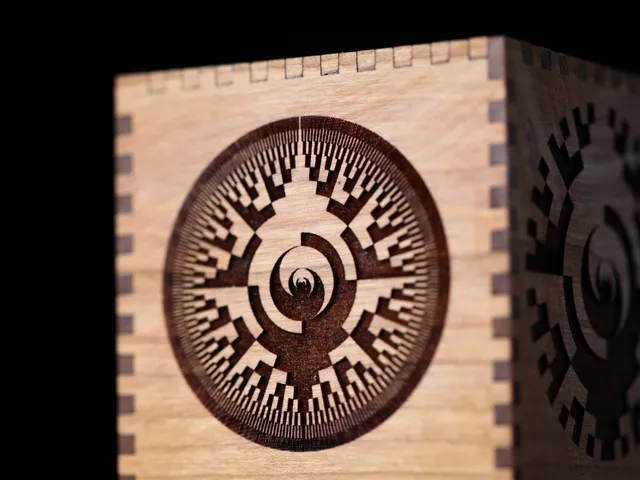
Yes, if its maker sells a laser module with the firmware and software to run it. Bambu Lab’s H2D, H2S, H2C and H2D Pro and Snapmaker’s Artisan and 2.0 offer one, and the laser both engraves and cuts. On the Bambu Lab machines, a stock printer can take the laser later through an upgrade kit.
What the laser can do depends on its power:
- Cutting depth. Bambu Lab lists a maximum cut of 5 mm basswood plywood for its 10 W module and 15 mm for its 40 W module. Snapmaker gives the same 5 mm and 15 mm for the Artisan’s 10 W and 40 W lasers.
- Materials. Bambu Lab lists wood, rubber, metal sheet, leather, dark acrylic and stone. Both makers name dark acrylic only, and Snapmaker’s cutting list excludes blue acrylic.
- Which power fits. The Bambu Lab H2S takes only the 10 W module, because the 40 W module collides with its toolhead and air duct. The H2D, H2C and H2D Pro take either.
On the Bambu Lab machines the laser covers less of the bed than the nozzle. The H2D prints 325 x 320 mm with one nozzle but lasers 310 x 270 mm with the 10 W module and 310 x 250 mm with the 40 W. The H2S prints 340 x 320 mm and lasers 310 x 260 mm. On the Snapmaker Artisan both areas measure 400 x 400 mm. The 10 W vs 40 W laser module guide compares the two powers.
Do hybrid machines compromise print quality?
Not on the spec sheet. Bambu Lab sells the H2D with and without the laser, and the printer specs are identical: the same 325 x 320 x 325 mm single-nozzle volume, 350 °C hotend and 65 °C chamber. Tom’s Hardware’s review states both versions “share the same 3D printer capabilities.” Print differences come from each machine’s base design.
Two points to check:
- The air-assist tube. Bambu Lab’s installation guide says to remove the laser’s air-assist tube when you are not lasering, so the cable chain moves freely “and ensure printing quality.”
- The base machine. The Snapmaker Artisan is a bed slinger built on linear modules, with a maximum recommended print speed of 180 mm/s. Bambu Lab lists a 1,000 mm/s maximum toolhead speed for the H2D. The Snapmaker 2.0 A350T heats its bed to 80 °C and its nozzle to 275 °C.
How does a hybrid machine compare with a separate printer and laser cutter?
A hybrid saves a second machine’s footprint and a second enclosure. In exchange it runs one job at a time and needs a module and platform swap to change mode. Its laser area is also smaller than a standalone laser’s. At launch, Bambu Lab’s 10 W laser package added $600 to the price of an H2D.
Here is how the Bambu Lab H2D Laser Full Combo (40 W) and a standalone enclosed diode laser, the xTool S1 (40 W), compare on their makers’ spec sheets:
- Footprint. The H2D measures 492 x 514 x 626 mm for both jobs. The xTool S1 needs 765 x 561 x 183 mm of its own, beside the printer.
- Laser work area. 310 x 250 mm on the H2D, 498 x 319 mm on the xTool S1.
- Jobs at once. The H2D prints or lasers. Two machines can print and laser in parallel.
Price. At launch the H2D AMS Combo cost $2,199. The H2D Laser Full Combo cost $2,799 with the 10 W laser and $3,499 with the 40 W. The laser combos add the laser module, a cutting module, laser and cutting platforms and an emergency stop button. On the H2S the step is also $600: $1,499 for the Combo and $2,099 for the Laser Full Combo.
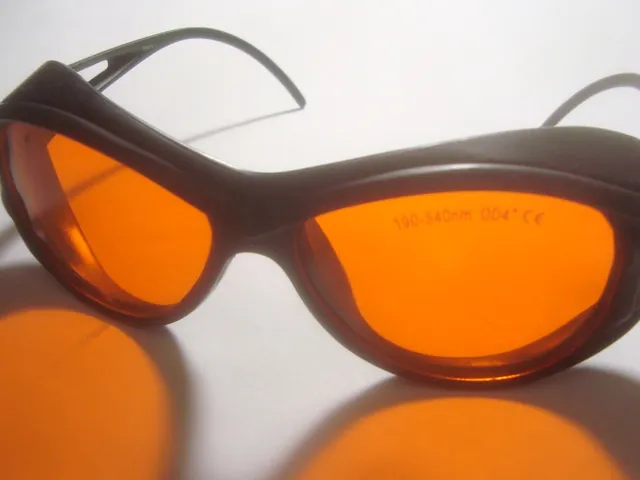
Safety. The U.S. Food and Drug Administration (FDA) sorts lasers into classes I to IV. A Class IV beam is an immediate eye and skin hazard, direct or reflected, and may start a fire. Every laser module here is Class 4 on its own. Bambu Lab rates the whole H2D laser edition Class 1, and Snapmaker says the Artisan’s enclosure “reduces laser hazards from Class 4 to Class 1.” Snapmaker lists the 1.6 W laser of the Snapmaker 2.0 as Class 4. A standalone laser’s class depends on its enclosure, so read the label. The desktop laser safety guide covers the classes and eyewear.
Switching time. Changing mode means a hardware swap on every combo:
- Bambu Lab H2 series. Fit the laser on the toolhead, lock the lever, and swap the build plate for the laser platform. The printer runs a mount calibration each time the laser module powers on again.
- Snapmaker Artisan. Snapmaker describes a “one-minute quick-swap design” for toolheads and platforms. Tom’s Hardware’s review notes the laser needs calibrating after each install.
- Snapmaker 2.0. The A350T Quick Swap version uses Snapmaker’s Quick Swap Kit, also sold separately for $149. Snapmaker rates it at a “one minute swap” with “no more screws.” Without the kit, every module and platform is screwed in.
Lasering also makes smoke. Bambu Lab’s guide routes a 100 mm exhaust duct from the H2 series outdoors or into a smoke purifier, and the Artisan’s enclosure has its own exhaust fan. The guide to 3D printers vs laser engravers compares the two kinds of machine in full.
What is pen plotting on a 3D printer?
Pen plotting means the machine holds a pen in place of the nozzle or laser and draws a vector image on paper or card. On the Bambu Lab H2 series, the Cutting Module takes pens 10.5 to 12.5 mm in diameter and draws within 300 x 255 mm. The same module carries a blade for cutting vinyl and paper.
The Cutting Module and a cutting platform ship in the H2D and H2S Laser Full Combos. Bambu Lab’s H2D spec sheet and wiki give the blade figures:
- Blade: 45° x 0.35 mm, with 50 to 600 gf of downforce.
- Maximum cut: 0.5 mm thick, in paper, vinyl, leather and similar sheets.
- Area: 300 x 285 mm on the H2D and H2C, and 297.5 x 300 mm on the H2S.
Bambu Lab prepares laser, blade and pen jobs in Bambu Suite, a separate program from its Bambu Studio slicer.